The NFPA 10 inspection checklist for portable extinguishers
Updated August 2026Reviewed July 2026
The annual maintenance under NFPA 10 is a hands-on walk of each portable extinguisher. Here is the itemized version a technician runs, unit by unit, before a fresh dated tag goes on.
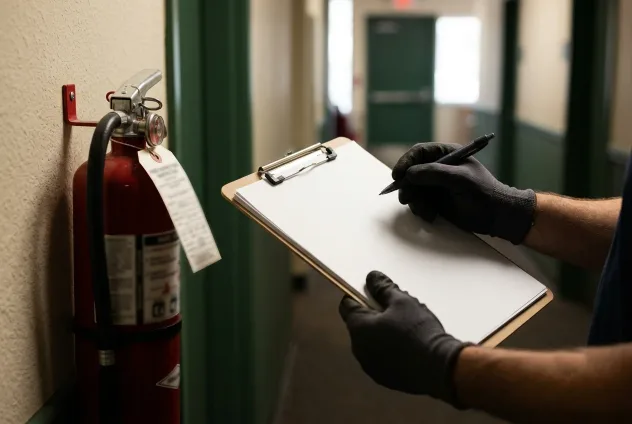
Location and access
The extinguisher is in its assigned location and mounting. It is visible, reachable, and nothing is blocking it. The signage above it is present and readable.
Condition of the unit
The pressure gauge reads in the operating (green) range. The pull-pin is seated and the tamper seal is intact. The hose, nozzle, and horn are clear and undamaged. The shell shows no corrosion, dents, or leakage. The nameplate and operating instructions are legible.
Weight and charge
The unit is at or near its full rated charge, with no sign of a partial discharge since the last visit.
Records and dates
The manufacture date is captured, so the internal and hydrostatic cycles are anchored correctly. The prior service tag is read and reconciled with the schedule. A new dated tag records the date, the result, the next-due date, and the technician.
What happens when something fails
Anything out of range becomes a documented deficiency, not a guess: a low gauge flags a recharge, an overdue shell flags a hydrostatic test, damage flags a repair or replacement. The remedy is quoted; you set the price.
Cadences vary by jurisdiction — verify with your AHJ. This is a working checklist to adapt to your authority's adopted edition, not a substitute for it.
Frequently Asked Questions
- What does the NFPA 10 annual maintenance actually cover?
- A hands-on external check of each portable extinguisher: its location and access, the gauge, pin and seal, the hose and nozzle, the shell and nameplate, and the charge, ending in a fresh dated tag.
- What happens when a unit fails a check?
- The finding becomes a documented deficiency with a suggested remedy — recharge, internal exam, hydrostatic test, repair, or replacement — that you quote at your own price. The record captures what was found and what was done.
Cadences vary by jurisdiction — verify with your AHJ.
Run the whole route in one place
GaugeRoute keeps every asset on its NFPA-keyed schedule, the inspection on the record, and the billing on your own rails. Free to start.