Fire extinguisher service tags, explained
Updated August 2026Reviewed July 2026
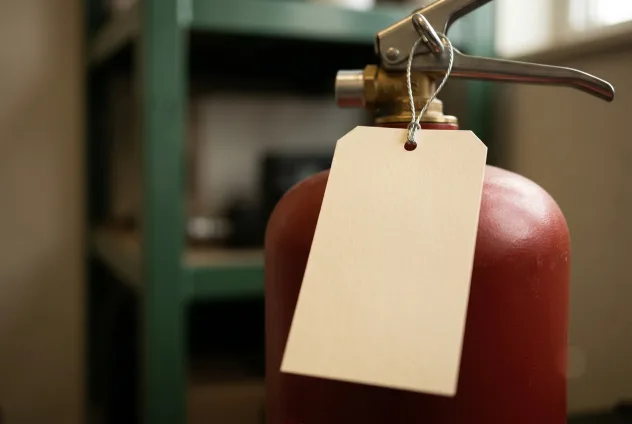
The service tag is the small card wired to the neck of every fire extinguisher. It looks like a formality. It is really a record. Anyone who walks up to a unit can read, in a few seconds, when it was last serviced, who did the work, and whether it is current.
What a service tag records
A good tag answers four questions: what was done, when, by whom, and under what license. The month and year are usually punched on the edge so a reader can confirm the date without pulling the tag off. The technician signs or initials it, and many tags carry a license number so the work traces back to a real person who is authorized to do it.
The tag is one face of a larger record. Behind it sits the serial number stamped on the cylinder. That serial is what turns a shelf of red bottles into a tracked set of assets, each with its own dated history.
Why a fire marshal reads it
A marshal reads the tag first because it is the fastest signal in the room. Portable extinguishers get an external, visual maintenance check every 12 months under NFPA 10. A current tag says that check happened and gives a date to prove it. An expired or blank tag is the cue to look closer.
The tag also points to the deeper cadence. A dry-chemical stored-pressure unit needs an internal examination every 6 years and a hydrostatic test every 12 years. Water, CO2, and wet-chemical units carry a 5-year hydrostatic test. The tag and the collar label together should tell that story at a glance. Cadences vary by jurisdiction — verify with your AHJ.
The record behind the tag
A tag can fall off, fade, or get painted over. The durable version of the same information is a dated, per-serial log you keep yourself: one line per unit, per visit — date serviced, service type, next date due. When you keep that log, a lost tag is an annoyance, not a gap, and the record on file always matches the tag on the wall.
Frequently Asked Questions
- What information is on a fire extinguisher service tag?
- What service was done, when, by whom, and often under what license. The month and year are usually punched on the edge, and the technician signs or initials it so the work traces to an authorized person.
- Why does a fire marshal read the tag first?
- It is the fastest signal in the room. A current tag shows the annual maintenance happened and gives a date to prove it; an expired or blank tag is the cue to look closer.
Cadences vary by jurisdiction — verify with your AHJ.
Run the whole route in one place
GaugeRoute keeps every asset on its NFPA-keyed schedule, the inspection on the record, and the billing on your own rails. Free to start.