Route density: the economics that make or break the day
Updated July 2026
Two shops can bill the same rate, service the same number of extinguishers a year, and one makes money while the other treads water. The difference is almost never the price. It is the map. Density — how tightly your accounts cluster — decides how many stops fit in a day, and stops-per-day is the number that quietly sets your whole profit.
This chapter is about the geometry of the route: why drive time is the enemy, how clustering multiplies your effective hourly revenue, and how to build a book neighborhood by neighborhood so the days get shorter while the invoices hold.
Drive time is dead time
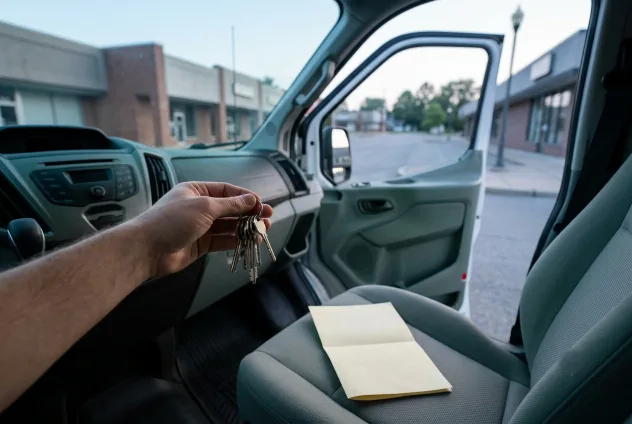
Every minute between stops earns nothing. You cannot tag an extinguisher on the highway, you cannot bill for a parking search, and the fuel and wear run whether the van is working or idling in traffic. The service itself is the only part of the day that pays, and everything around it is overhead you are trying to shrink.
That reframes the whole job. You are not really selling inspections; you are selling billable minutes, and drive time is the tax on every one of them. A shop that spends half its day driving is working the same hours as a shop that spends a quarter of it driving and taking home far less. Nothing about the two crews' skill or price explains the gap. The map does.
The stops-per-day math
Picture a working day of roughly eight hours. Every stop is drive time plus service time. If the service on a small site takes 30 minutes but the drive to reach it averages 30 minutes, half your day is gone to the road, and you fit maybe eight stops. Cut the average drive to 10 minutes by clustering accounts, and the same day holds twelve or more stops for the same hours worked. You did not work harder or charge more; you simply stopped paying the drive tax so often.
Now put revenue on it. Suppose an average stop bills a few hundred dollars once you count the units, the trip fee, and any deficiency work. Adding three or four stops to a day, week after week, is a large raise that costs you nothing in rate and nothing in extra hours. That is the entire economic argument for density in one line: the same day, more billable stops, because the dead time between them shrank.
The exact numbers are yours to fill in — your service times, your market rates, your city. The route-value calculator on this site lets you run your own stops-per-day against your own pricing instead of trusting a made-up example. The shape of the answer, though, is always the same: drive time down, stops up, profit up.
Effective hourly revenue is the real scoreboard
Rate per unit is a vanity number. The number that pays your bills is effective hourly revenue: what you actually earn per hour across the whole day, drive time included. Two accounts billing the identical amount are worth wildly different money depending on where they sit, because one might cost you five minutes of driving and the other forty-five.
Density is the lever that moves this number the most, and it moves it faster than raising your rate ever will. Watch it against your labor cost: the going rate for a fire-extinguisher technician sits around $25 an hour, or roughly $40,000 to $55,000 a year for the middle of the range (per ZipRecruiter and Salary.com, 2026). Every hour a tech spends driving instead of servicing is that wage spent on nothing billable. Tighten the route and you are not just adding revenue — you are converting paid drive time back into paid service time, which lifts the margin on labor you are already buying.
So when you evaluate a new account, do not ask only what it bills. Ask what it does to your effective hourly revenue: does it sit inside a cluster you already drive to, or does it drag a technician across town for one stop? A smaller account inside the cluster often beats a larger one outside it.
Cluster the book by geography
Density is not luck; it is a sales strategy. When you chase accounts, chase them by map, not at random. Land a good account and immediately work the block around it — the storefronts on the same street, the other tenants in the same plaza, the businesses that share the parking lot. Each new account inside an existing cluster costs almost no new drive time, so its effective hourly revenue is high from day one.
This is why the smart move after winning one site is to canvass its neighbors while you are already parked there. You have the van, the gear, and a fresh reference two doors down. The marginal cost of the next stop in a dense cluster is close to zero, which means the accounts you can reach without extra driving are the most profitable ones you will ever sign, regardless of their size.
Over time this turns your service calendar into a geography. Instead of a scattered list of due dates, you run a neighborhood on a Tuesday and another on a Wednesday, because the accounts that come due together also sit together. Building the book that way from the start is far easier than untangling a scattered book later.
Why one property manager beats a dozen scattered accounts
The single most valuable relationship in this trade is a property manager with a portfolio of buildings. One signature can hand you a dozen sites — and if those buildings cluster in a district, you have just bought a whole profitable day with one conversation. The density comes pre-assembled: same contact, same billing, often similar layouts, and stops close enough that the drive tax between them nearly disappears.
Compare that to a dozen accounts you won one at a time across the county. Same unit count, same annual revenue on paper, but the scattered version costs you drive time on every visit forever, splits your billing across a dozen contacts, and multiplies the ways a renewal can slip. The portfolio account is worth more per hour, easier to keep, and easier to grow, because pleasing one manager can cascade into the next building they take on.
So weight your selling toward the accounts that bring density with them: property managers, small commercial landlords, franchise groups, anyone who controls several sites at once. One of them can be worth more to your effective hourly revenue than a month of chasing single storefronts.
Density and the record work together
A dense route only pays if you can actually run it as a route — see which accounts come due in the same window, and sequence the day by geography instead of by whoever called. That is a record problem before it is a driving problem. When every asset carries a serial, a site, and a next-due date, you can group the stops that sit near each other and are due near each other, and plan a tight day instead of a scattered one.
Lose track of the dates and the density evaporates: you end up making a special trip for the one site you forgot, paying the drive tax you spent months building the book to avoid. Route software that keeps each asset on its NFPA clock and ties it to a location is what lets the geography you assembled turn into short, full days. The map you build and the record you keep are the same asset seen from two sides. Cadences vary by jurisdiction — verify with your AHJ which services each site owes and when.
Go deeper
Frequently Asked Questions
- What is route density in the fire inspection business?
- It is how tightly your accounts cluster geographically. A dense route packs many stops into a small area, so drive time between them is short. Because drive time earns nothing, density decides how many billable stops fit in a day and quietly sets your profit.
- Why does drive time matter so much?
- Because it is dead time — you cannot bill for it, but fuel, wear, and your technician’s wage all run during it. The going rate for a fire-extinguisher technician is around $25 an hour (per ZipRecruiter and Salary.com, 2026), so every hour spent driving instead of servicing is wage spent on nothing billable.
- How does density increase my hourly revenue?
- By turning drive time back into service time. Cutting the average drive between stops from 30 minutes to 10 can lift a day from roughly eight stops to twelve or more for the same hours worked — a large raise with no change in rate. Effective hourly revenue, not rate per unit, is the number that pays your bills.
- Why is one property manager worth more than a dozen scattered accounts?
- A property manager with a portfolio hands you several sites with one signature — often clustered, one contact, one billing relationship — so the density comes pre-assembled and each stop costs almost no extra drive time. A dozen accounts won one at a time across a county carry the same revenue on paper but cost drive time on every visit forever.
- How do I build a dense route from scratch?
- Chase accounts by map, not at random. Win one site, then canvass its neighbors while you are already parked there — the next stop in a cluster costs almost no new drive time. Keep every asset on a record with its site and next-due date so you can sequence the day by geography instead of by whoever called.
Run the whole route in one place
GaugeRoute keeps every asset on its NFPA-keyed schedule, the inspection on the record, and the billing on your own rails — with unlimited technician seats. Free to start.