How to start a fire extinguisher inspection business
Updated August 2026Reviewed July 2026
A fire extinguisher inspection business is a route business. You build a book of local sites, service their equipment on a schedule, and come back next year to do it again. The work is steady, the gear is affordable, and the barrier to entry is skill and a license, not a warehouse full of trucks.
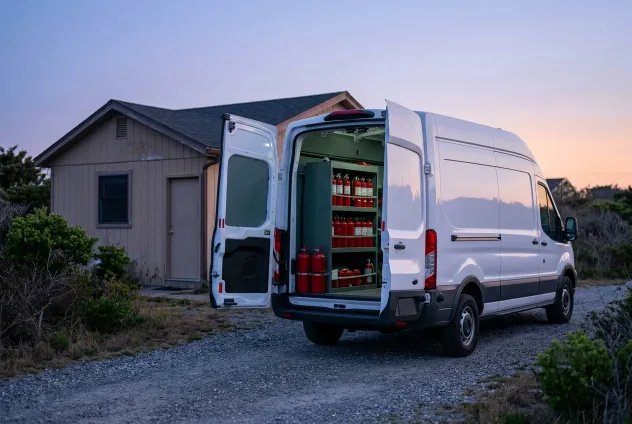
Get licensed first
Licensing comes before customers. Most states require a distributor or firm license to sell and service portable fire extinguishers, plus a technician license or certification for the person doing the work. Rules differ by state, and some cities add their own registration. Do not guess here. Contact your state fire marshal's office or the agency that regulates the trade and confirm exactly which licenses you need before you take a paying job.
You will also want liability insurance and, for hydrostatic testing, either the right equipment or a partner shop that handles it.
Learn the cadence
Your service calendar is set by the standards. Portable extinguishers get an external maintenance check every 12 months under NFPA 10. Dry-chemical units add an internal examination every 6 years and a hydrostatic test every 12 years. Water, CO2, and wet-chemical units get a 5-year hydrostatic test. Kitchen hood systems are serviced every 6 months under NFPA 96 and UL-300. Cadences vary by jurisdiction — verify with your AHJ.
Knowing the cadence is what lets you quote a site and schedule a return visit with confidence.
Land the first customers
Your first accounts are local and unglamorous: small restaurants, auto shops, churches, daycares, storefronts, and property managers. These sites already know they need annual service. Walk in, offer a straight price, and be reliable. One good property manager can hand you a dozen buildings.
Reliability is the whole pitch. Show up when you say, tag the work cleanly, and leave a record the owner can hand to a marshal.
Keep the record from day one
The route only compounds if you can find every unit again next year. From your first account, log each asset by serial with its service date and next due date. A per-serial record holds that history and reminds you when each site comes due, so your route runs itself into year two.
Frequently Asked Questions
- Do I need a license to inspect fire extinguishers?
- In most states, yes — usually a firm or distributor license plus a technician license or certification, and some cities add their own registration. Confirm the exact requirements with your state fire marshal before taking paid work.
- What makes a fire extinguisher business worth building?
- The work recurs. Every site you service this year is due again on a known cadence, so a steady book of accounts becomes a renewal calendar that fills itself in year two.
Cadences vary by jurisdiction — verify with your AHJ.
Run the whole route in one place
GaugeRoute keeps every asset on its NFPA-keyed schedule, the inspection on the record, and the billing on your own rails. Free to start.